How long does it take to rank in Google?
#seo . #google . #build-in-public

People want a number for how long to rank in Google, and I get why. AI made building a website almost free. You can have a clean, fast, perfectly optimized site finished in an afternoon now. So the natural assumption is: it is done, submit it, wait a couple of weeks, watch the traffic arrive. That is not how it works, and after running more than 150 domains I can tell you the honest version. The keywords are not the hard part anymore. Time is.
A perfect site that sits still will decay
Here is the thing nobody tells you. If I finish a site, and it is genuinely perfect, perfect keywords and all, and I just leave it there after submitting it, Google will like it for a few days and then it fades. Even with everything technically right, an abandoned site decays.
Google’s crawlers are not really grading your launch. They are watching for a project that is alive: something evolving, cared for, respected over time, not finished and dropped on the floor. A site that visibly keeps growing earns trust. A site frozen the day it launched looks done, and done quietly turns into forgotten. This is why people with “perfect” keywords still do not rank. They did the easy part and skipped the only part that compounds.
So the real answer to how long it takes for SEO to work is not a fixed number of weeks. It is however long you are willing to keep showing up.
Pick one or two days a week and actually work on it
If I had to give one rule to anyone stuck on this, it would be simple. Decide on one or two days a week that are for this project. On those days you improve something or add something genuinely interesting, and then you resubmit to Google Search Console and ping IndexNow. That is it. Not a frantic daily grind, just a steady, respected rhythm.
That rhythm is the signal. Every small, real improvement tells the crawler the same thing: this is a living project, come back. You are not gaming anything. You are just refusing to abandon it, and over a few months that patience is what separates a site that ranks from a site that sits at position 50 forever. This is the seo timeline that actually matters, the one measured in your own consistency.

Start from a single page
This is the part I would tattoo on people, because it is how all of my sites actually grew. Do not try to rank twenty pages at once. Start from a single page.
You publish one strong page and you wait. Days, sometimes weeks. That page starts pulling clicks and impressions. As it does, Google gives your site more crawl budget, because now there is a real reason to come back. Only then do you place a link from that winning page to a fresh page you just created. Now real visitors, actual interested humans, click from the page that is already working into the new one. Google sees independent traffic flowing into a brand new page, and it loves that.
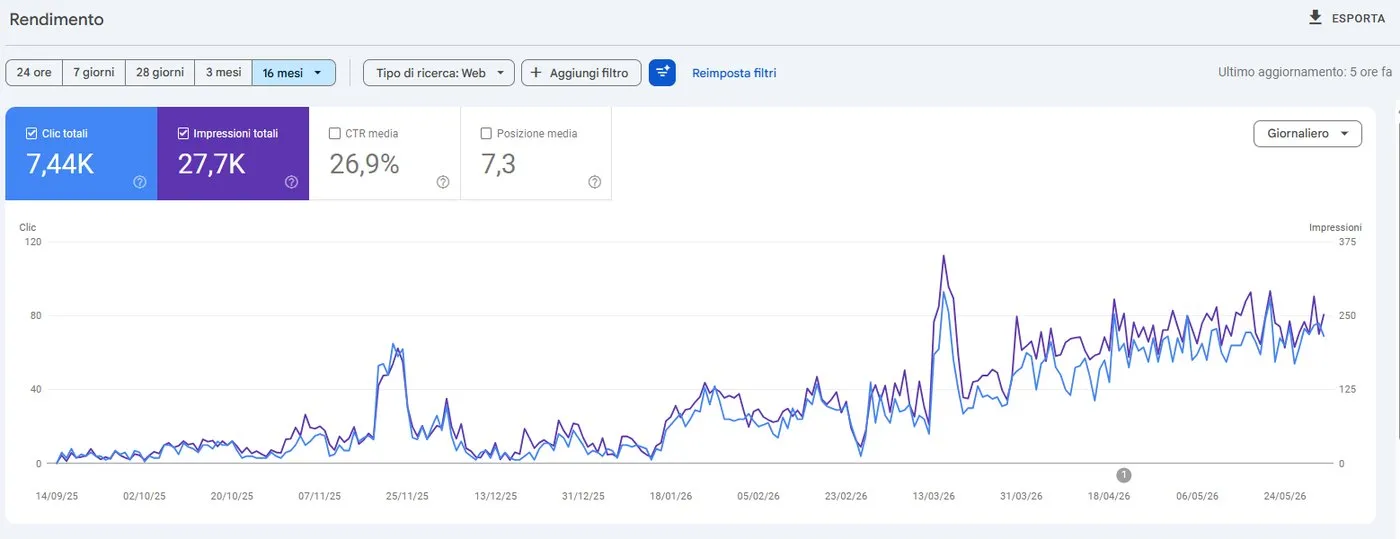
You repeat it. The core page keeps delivering, and you use its link juice to pull each new page up behind it, making the rest of the site easy to reach from the one place that already has authority. That is how you get every page indexed without leaving dead pages on the floor, and it is how you scale a site that performs instead of a pile of pages that never get seen. It happened that way for me every single time.
Get one to three backlinks people actually click
You do not need an agency and you do not need to buy links. For a new site, one to three good backlinks are enough, and the definition of “good” is simpler than the industry pretends: a backlink is good if a real person clicks it and lands on your site.
That reframes everything. The best sources are the ones with real humans who will click through. Pinterest is the best for this, a thematic pin that gets impressions and sends interested people to your site. After that, YouTube: a creator reviewing your site with the link in the description, where even three to five genuinely interested people clicking will move you more than you would believe. Then Reddit, or any place with a real audience.
There is also the move of using an audience you already have somewhere else. You write the piece on a platform that carries link authority, then push your own audience to it, and even if only a handful click the link inside, the job is done. It is a bit of a workaround and I would not lead with it, but it works. The principle underneath all of it stays the same: a click from a real person is the whole game.
SEO is like raising a baby
The honest framing is that a young site is like a baby in its first months. You follow each stage of its development, you stay patient, and you do not panic when nothing happens yet. Great keywords with no time behind them will not rank. I have grown several sites patiently over more than a year, and their traffic curves all tell the same story: almost flat for months, a slow crawl, and then it compounds into a steep climb. The keywords were good the whole time. What changed was time.
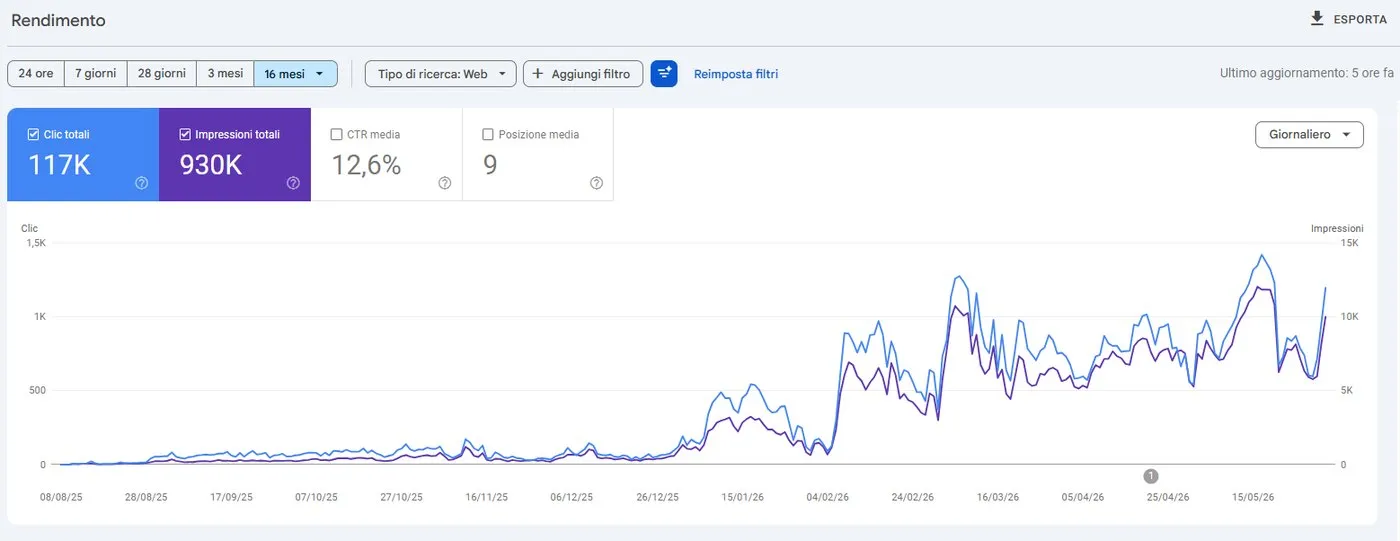
That shape is not luck or one good niche. It repeats across different projects, because the ingredient is the same every time: months of showing up.
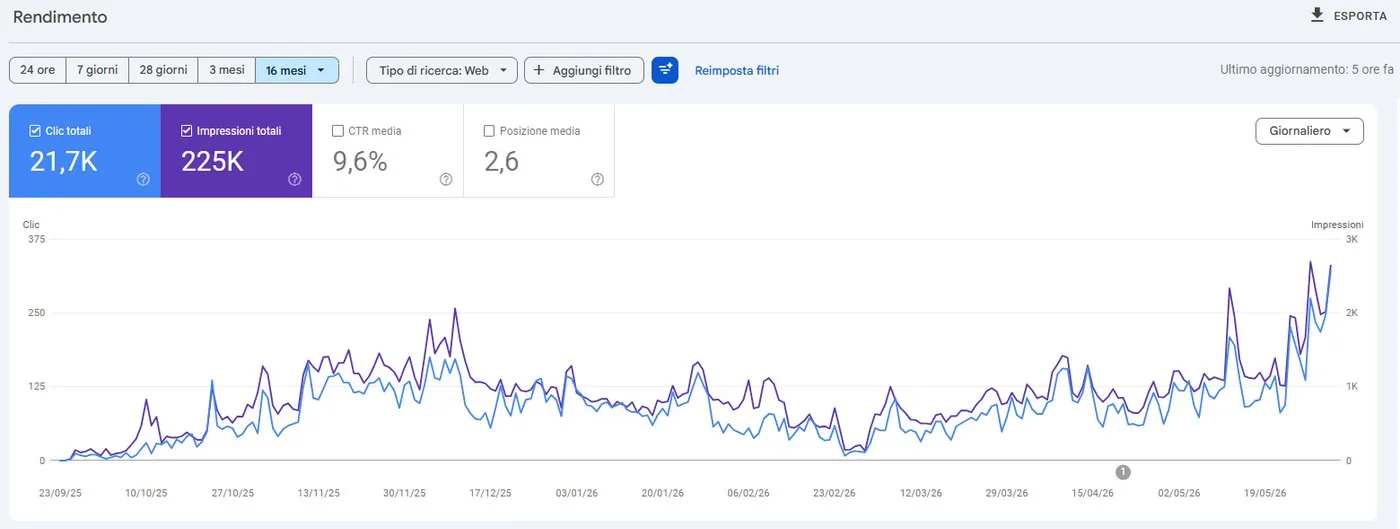
And there is a discipline most people get exactly backwards. When a page is performing out of the ordinary, you leave it alone. If a page is suddenly pulling huge numbers, do not “improve” it. Do not add a video and a new section and three more images because you are excited. That page is riding its wave, and you do not interrupt a wave. I wait until a page falls well off its peak, roughly 60 percent down, before I touch anything. Until then, you let it run and watch what it can do on its own.
That is the real answer to how long to rank in Google. Not a number. It is whether you treat the site like something living, give it your one or two days a week, start from a single page, earn a few real clicks, and then have the patience to leave the good things alone. The people who win at this are not the ones with the best keywords. They are the ones who keep showing up.
If you want the reason I write all of this down in the open, it is over here. And the honest take on another game where everyone wants a shortcut and the real edge is patience is in the prop firm piece.