Second-Stage Paradises: the 2026 nomad map
#nomad . #2026 . #emerging-destinations . #travel
I spent the start of 2026 between Thailand and Bali, two places that were a discovery ten years ago and are a queue today. They still work, I still love them, but one thing became clear: by the time a place lands on fifty identical blogs, the good part is already gone. Prices have doubled, rents have pushed the locals out, and you are just one more foreigner with a laptop in a cafe that now exists for you.
So I started thinking about places differently. Not “where is good now,” but “where will be good a year from now, while it still costs little and nobody is writing about it.” It is the same logic I use with keywords when I work online: you do not chase the crowded ones, you find the ones quietly rising before everyone else does. Applied to places, it becomes a map. This one.
The life cycle of a nomad paradise
Every nomad destination moves through four stages, always the same.
The first is the frontier: only locals and a few crazy people live there, it costs almost nothing, but working online is hard. The second is the tip-off: the first hundred nomads arrive, the first coworking opens, the first Telegram group is born. There is already a cafe with wifi but prices are still local and the story is still untold. The third is the boom: everyone talks about it, prices explode, the residents start protesting. Lisbon, Bali, Tulum and Madeira are here today. The fourth is saturation: the place has become a theme park for Westerners, and the story is dead because it is identical to a thousand others.
The right point to arrive is the second stage. There is already enough infrastructure to live and work, but the place is still itself. Most travelers chase the third stage, where everything already exists and you are just one more. I want the second, and this series exists to tell it from the inside, one stop at a time.
What changed in the world in 2026
Four things have shifted under the surface, and together they explain why today’s map is not the one from three years ago.
First: the slowmad won. The nomad who changed country every three weeks is finished. The 2025 data shows people now stay three to twelve months in one place. You live less on the surface and more in depth, and that changes the kind of story worth telling.
Second: visas became a commodity. We went from a handful of countries to more than sixty with a nomad visa, live or in the pipeline. In the last two years Slovenia, the Philippines, Japan, Kazakhstan and Kyrgyzstan joined in, the last being the first in Central Asia with a dedicated online platform. The visa is no longer the filter. The filter is where it is actually worth staying.
Third: dispersal. Lisbon and Bali are in crisis from too much success, between rising rents, protests and, in Bali, even water running short. Governments are pushing secondary cities to take the pressure off. That is how second-stage paradises get created almost to order: Tirana instead of Split, Da Nang instead of Bali, Peniche instead of Lisbon.
Fourth: infrastructure reached the frontier. Fiber arrived in Zanzibar, 5G covers Nairobi and Tashkent. Places that were unworkable until recently now hold up. That is why the second stage today sits in spots you would not even have considered before.
The 2026 map, by tier
I split the places into three tiers, by how close they are to the boom. The higher the tier, the faster the window closes.
Tier A: the window is closing, go now
Tirana and the Albanian Riviera. Europe’s last budget capital. A studio under five hundred euros, around nine hundred to fifteen hundred a month to live comfortably, decent fiber, a community forming right now. The story to tell is the Europe of fifteen years ago, before it was discovered. And for me it has an extra value: Tirana is Bari on the other side of the Adriatic, an overnight ferry from my family.
Tbilisi and Batumi, Georgia. A full year of stay with no visa, a one percent tax rate for freelancers, very low cost. It is the most mature of this group, almost third stage, but in Italian it is still virgin ground.
Da Nang, Vietnam. Bali’s quiet cousin. Beach and city together, real prices, while Bali drowns in its own success.
Tier B: pure second stage, the heart of the series
Asuncion, Paraguay. The tax wildcard. Lifetime residency, easy to get, territorial taxation, meaning income earned abroad is not taxed. Around seven hundred to twelve hundred euros a month, fast fiber. Here the story is not the beach, it is the legal tax haven almost nobody is looking at.
Muscat, Oman. The Gulf without Dubai. Clean, safe, with desert and mountains an hour away, and a remote-work visa live since 2024. It costs more, around two thousand six hundred a month, but it is the contrarian play: calm instead of chaos.
Tashkent, Uzbekistan. The Silk Road with 5G. A metro, cafes, coworking, the closest thing to a frontier turning into a city in front of you. In English it is thin, in Italian nobody covers it.
Tier C: real frontier, high risk and high story
Zanzibar, island life and Swahili culture with fiber just arrived. Dakar, in Senegal, safe and full of art, with a growing digital scene. Nairobi, the Silicon Savannah of 5G, where East Africa is opening its chapter right now. Bishkek, in Kyrgyzstan, absurd mountains, tiny cost and the first nomad visa in Central Asia. You do not go here for comfort, you go for the story nobody else is writing.
Why this is an edge, not just a trip
There is a concrete reason I cover second-stage places instead of the famous ones, and it is the same reason some keywords are worth it and others are not. The famous places already have everything: a thousand articles, no room. The emerging ones, in English, have little. In Italian, nothing. Arriving first, telling the place while it becomes famous, means that when search explodes your story is already there, a year old, the only one in the language. It is arbitrage applied to geography.
But under the numbers there is something simpler. Since the work runs almost on its own, the point of the trip is no longer the stamp in the passport. It is the story. I go to a place because a story comes out of it that nobody else can write, and that story stays. The movement stops being inertia and becomes something you build.
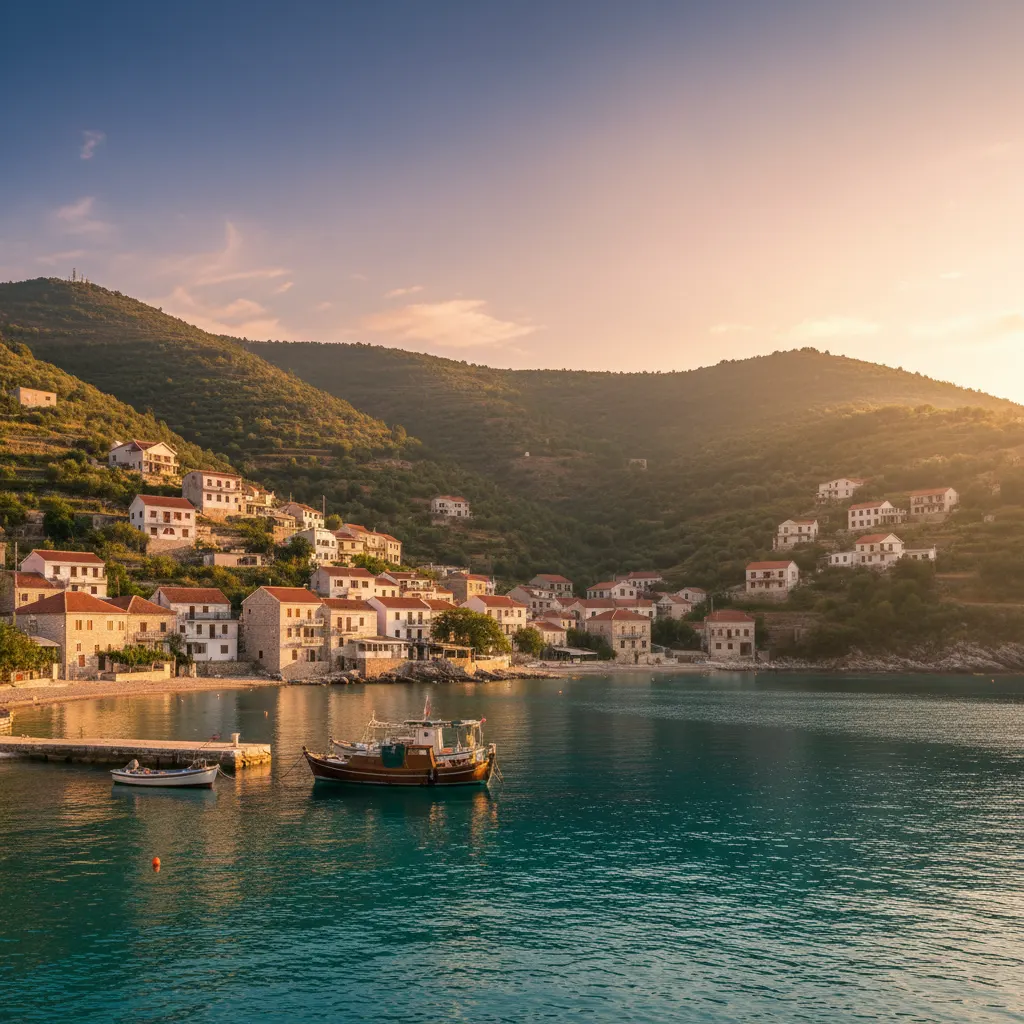
This is the map. The next entries are the individual places, told from the inside, while I live them. We start from the Adriatic.
If you want the full picture of where I have already lived, there is what it costs to live in Bali and how to move to Thailand, and the map of every stop on the travels page.